Origins
Born from an invasion
When Mongol (Tartar) armies swept through the Kingdom of Hungary in 1241, they exposed how few strongholds guarded its mountain valleys. In the decades that followed, a stone castle rose on the limestone crag above the Orava River, replacing an earlier wooden fort. Its job was simple: watch the trade road toward Poland and shelter the region in times of danger.
The oldest surviving core is Romanesque and early Gothic, clinging to the highest rock. Over time the castle grew downward and outward, each century adding new walls, gates and palaces along the ridge.
A timeline
Key moments in the castle’s story
- After 1241 — a stone castle is built on the crag; first documented in 1267 as a royal fortress.
- 14th–15th century — the castle expands down the ridge with new Gothic palaces and fortifications.
- 16th–17th century — the Thurzo family reshapes the fortress into a grand Renaissance residence.
- 1611 — the Thurzo reconstruction is essentially complete: the silhouette seen today.
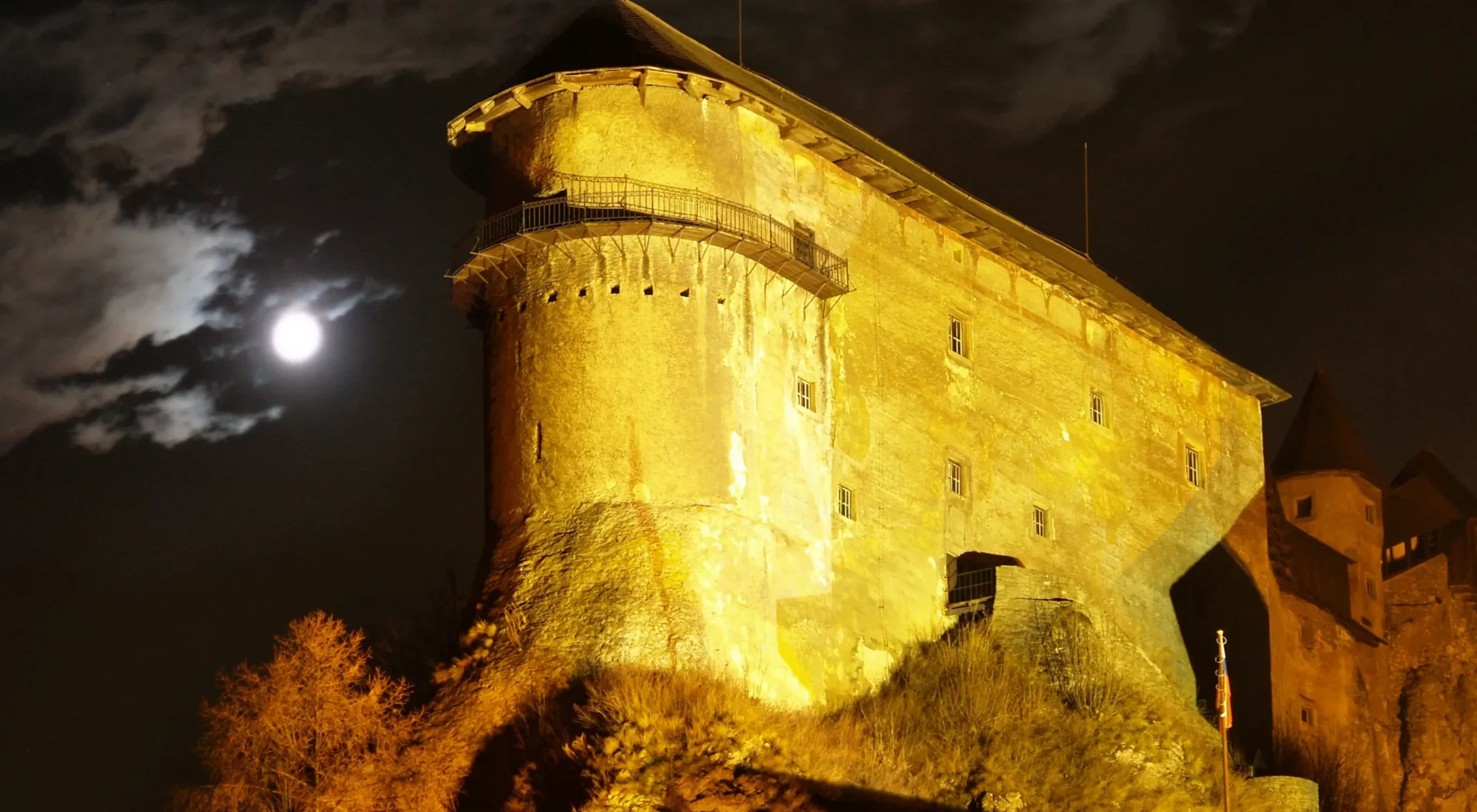
- 1800 — a devastating fire tears through the complex.
- 1868 — the Orava Museum is founded within the walls.
- After 1945 — a major restoration opens the castle to the public as a museum monument.
The Thurzo era
From fortress to residence
The Thurzos were among the richest families of the kingdom, with fortunes built on mining and trade. Their reconstruction turned a defensive stronghold into a comfortable aristocratic seat, adding Renaissance palaces, a chapel and representative halls without ever losing the castle’s dramatic, defensible perch.
That blend — a working fortress dressed as a nobleman’s residence — is exactly what gives Oravský hrad its unmistakable stacked profile today.
Fire, siege and time have all left their mark — yet the castle still stands very much as the Thurzos left it four centuries ago.
The “eagle’s nest”
Three castles in one
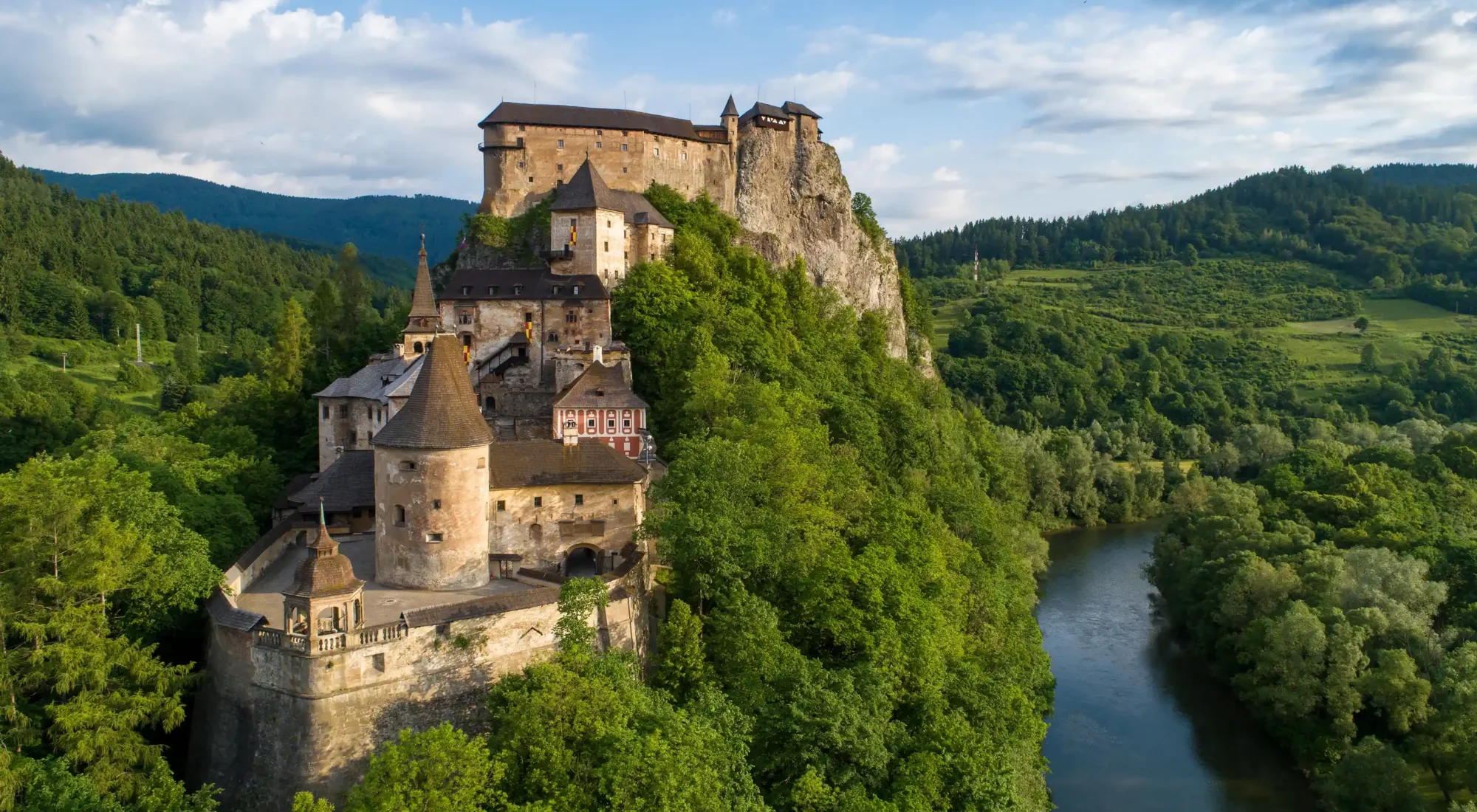
Oravský hrad isn’t a single building but a whole town of them, climbing 112 metres of rock in three tiers. The Lower Castle greets you at the base with courtyards and service buildings. The Middle Castle steps up through gates and palaces. The Upper Castle crowns the summit, where the oldest, most defensible walls cling to the very top of the crag.
Walking the route means climbing — a lot of it — but each level rewards you with a wider view over the Orava River winding far below.
Layers of style
Five centuries of building, side by side
Because it was rebuilt again and again, the castle is a living catalogue of architecture — you can read the passing of the centuries in its walls.
Romanesque & Gothic
The oldest core at the summit — thick defensive walls and the earliest palace, built when the castle was first and foremost a fortress.
Renaissance
The Thurzo signature: elegant residential palaces, arcades and representative halls that turned the stronghold into a noble seat.
Baroque & Neo-Gothic
Later additions and restorations — including the chapel’s Baroque touches and 19th-century Neo-Gothic repairs after the great fire.
The Orava Museum
A region’s memory, under one roof
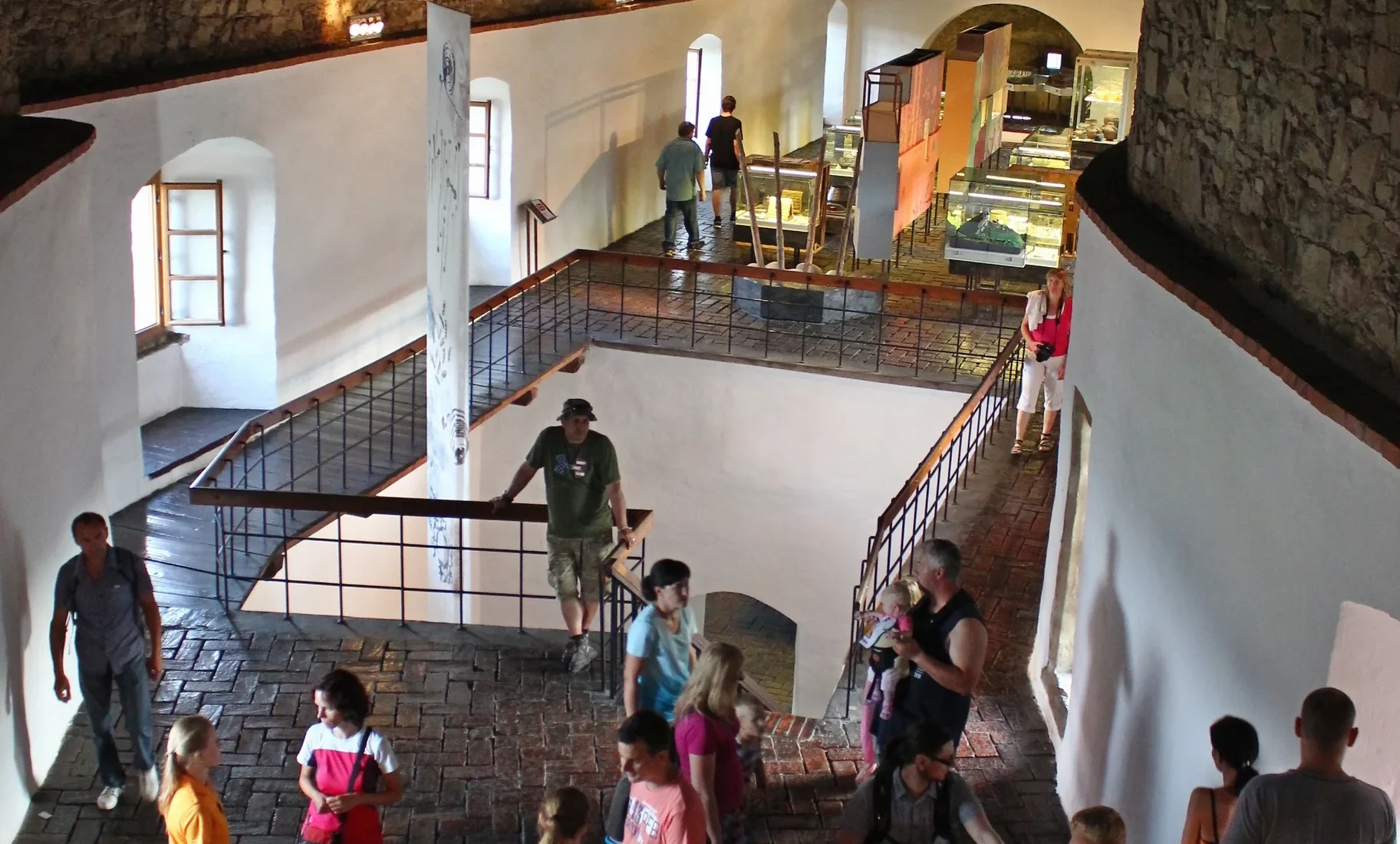
Since the 19th century the castle has been home to the Orava Museum, one of Slovakia’s oldest. Its exhibitions fill the historic rooms and lead you through the natural and human story of the Orava region.
- Natural history — the geology, forests and wildlife of the Orava mountains and river.
- Archaeology — finds tracing settlement in the valley from prehistory onward.
- Ethnography — folk costume, crafts and everyday life of Orava’s villages.
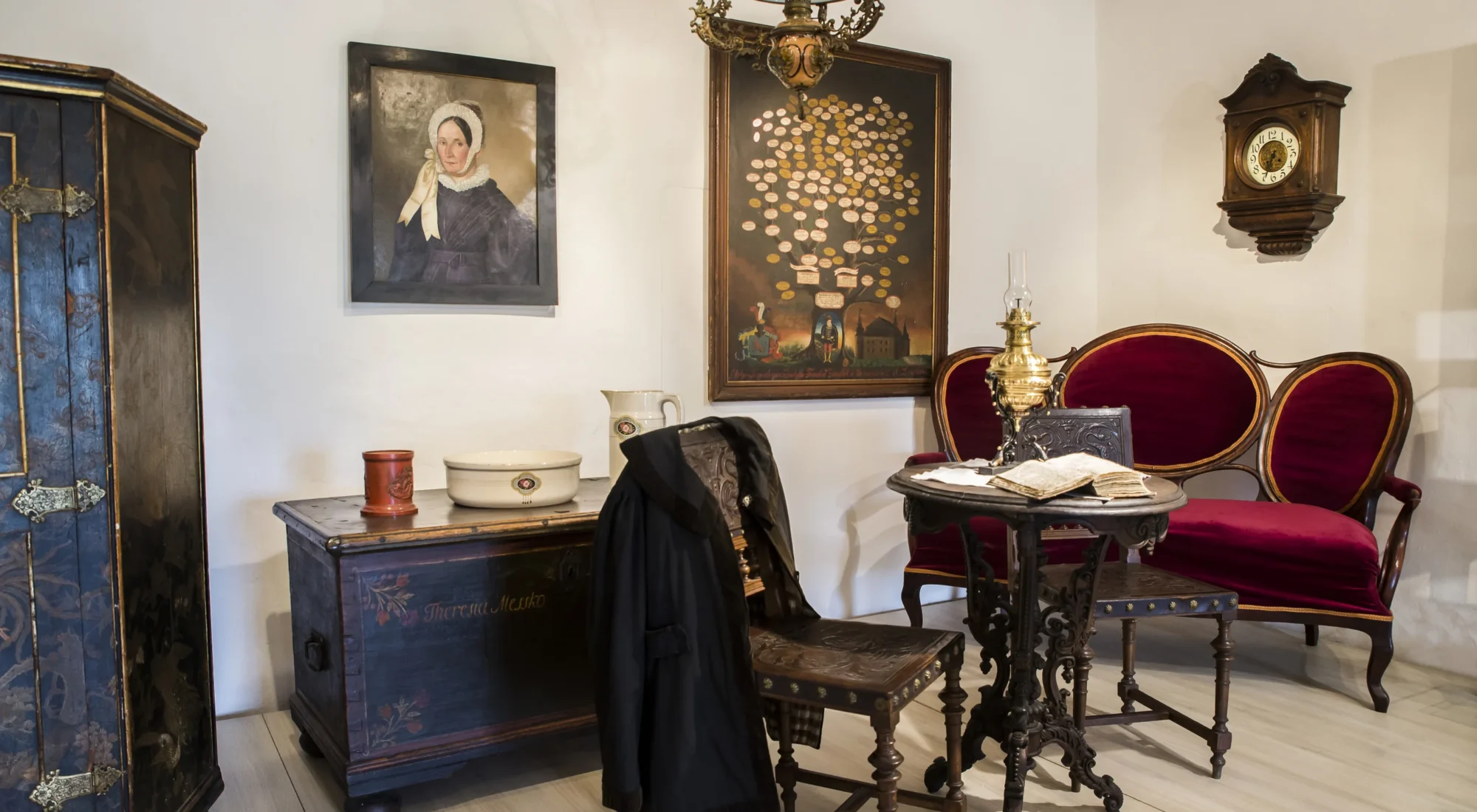
- History — the noble families, the castle interiors and period furnishings.